
Last updated August 28, 2026
Free in-home measure and quote - PGT, CGI and CWS impact lines compared on your actual openings, style by style

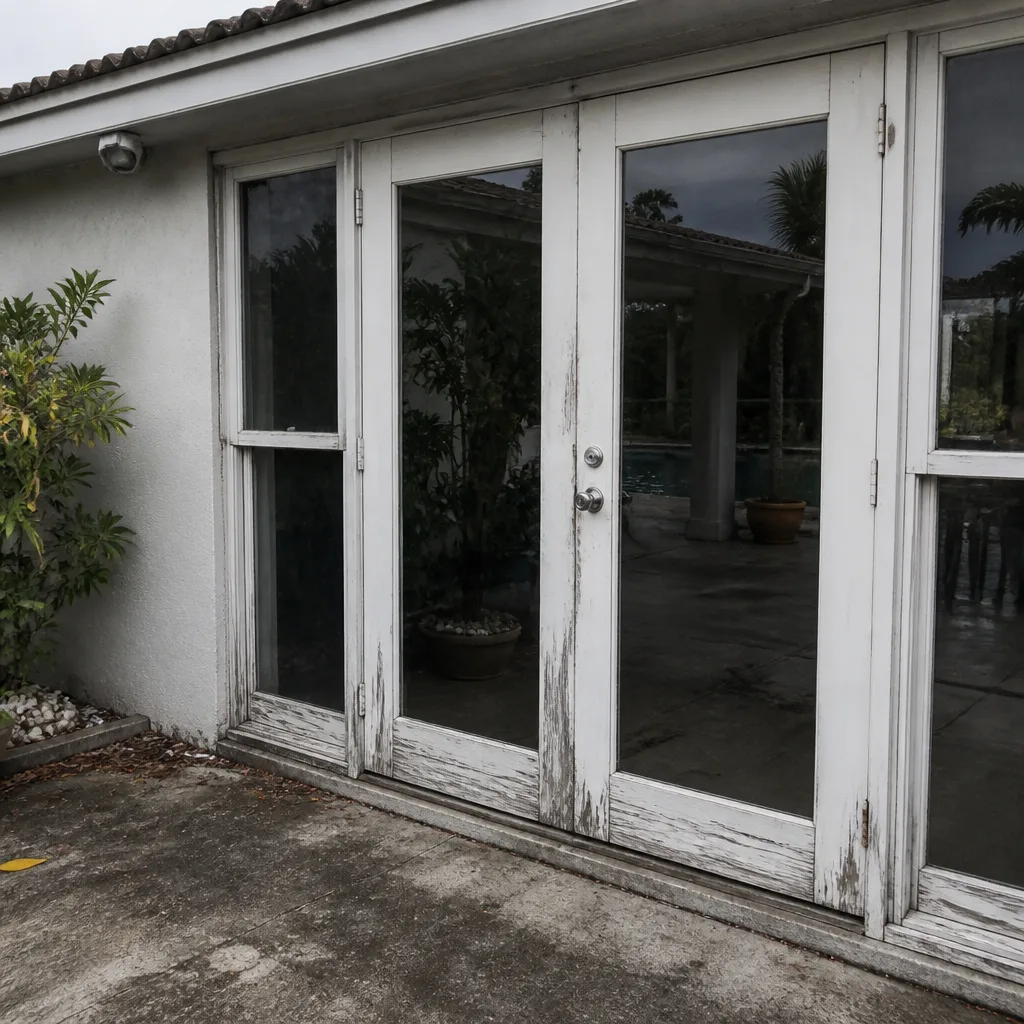 Before
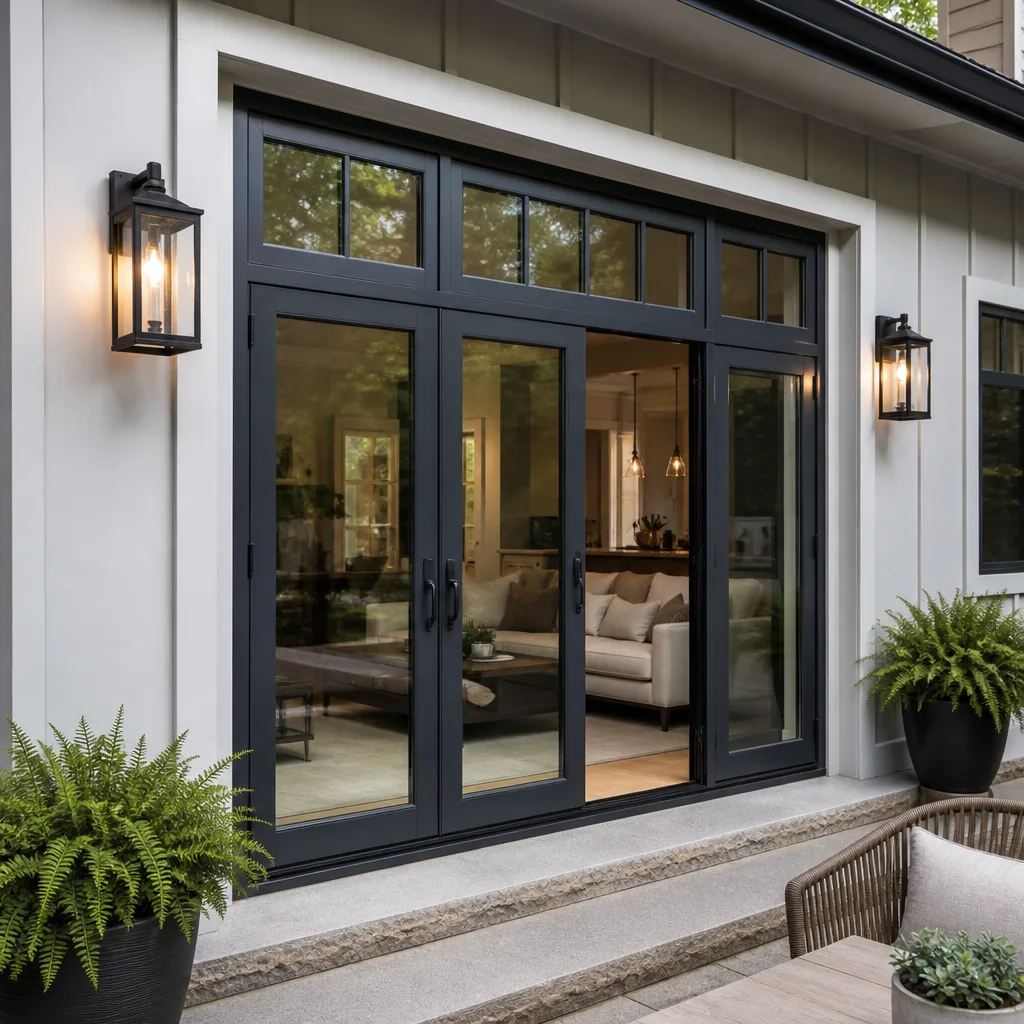
 After
After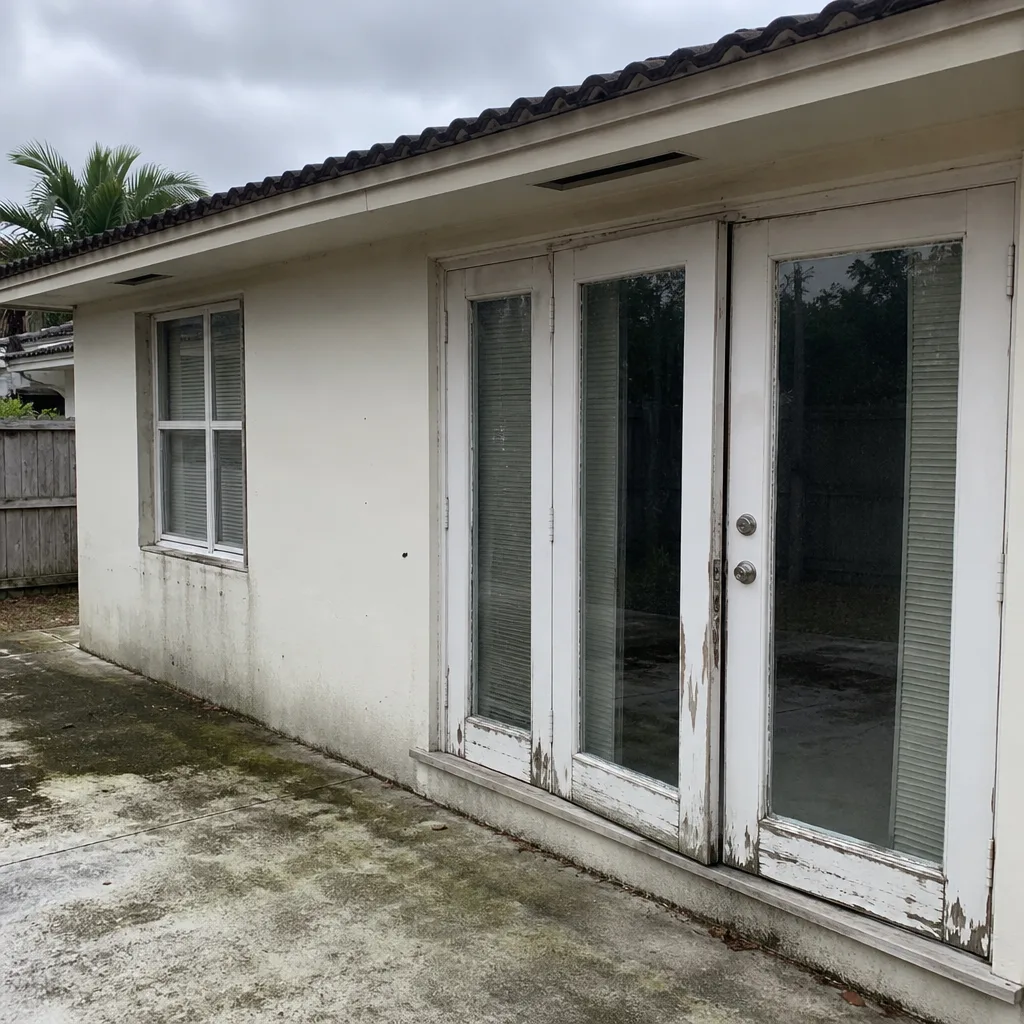 Before
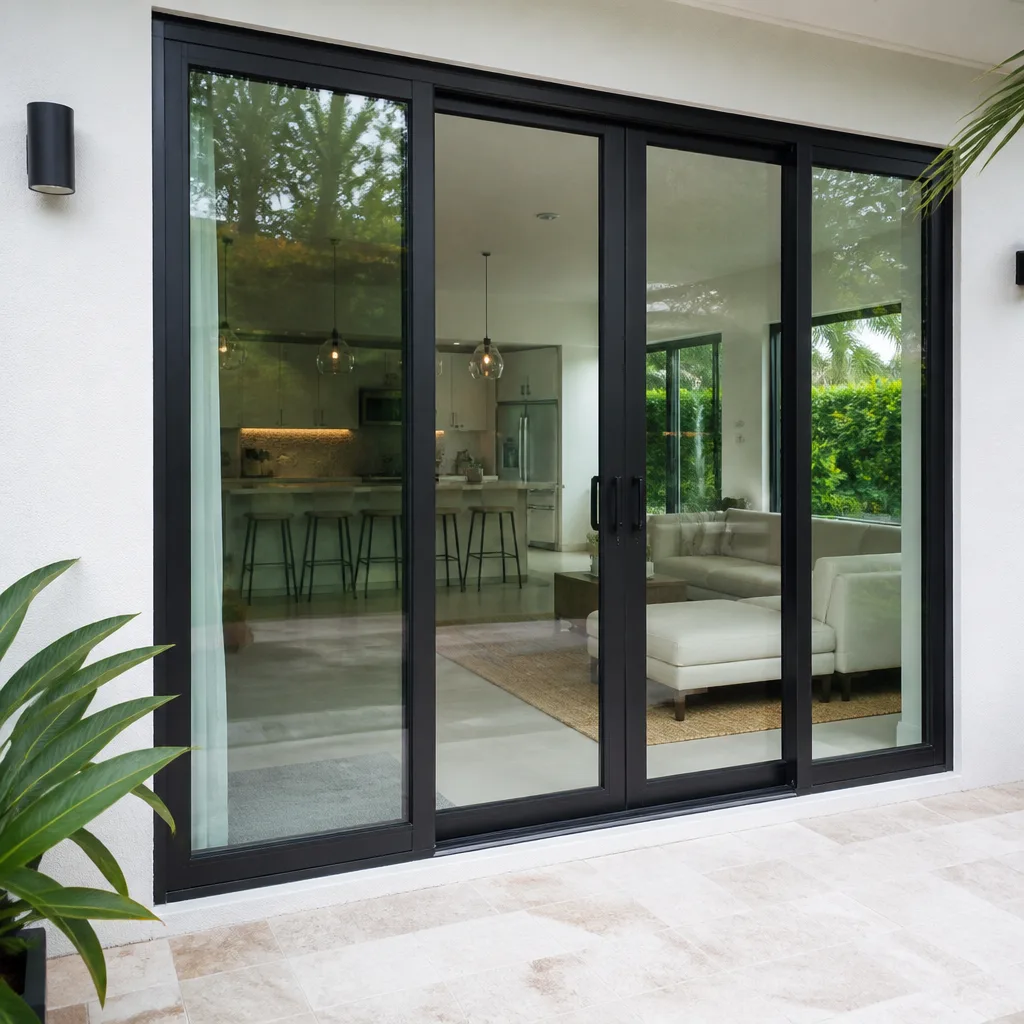
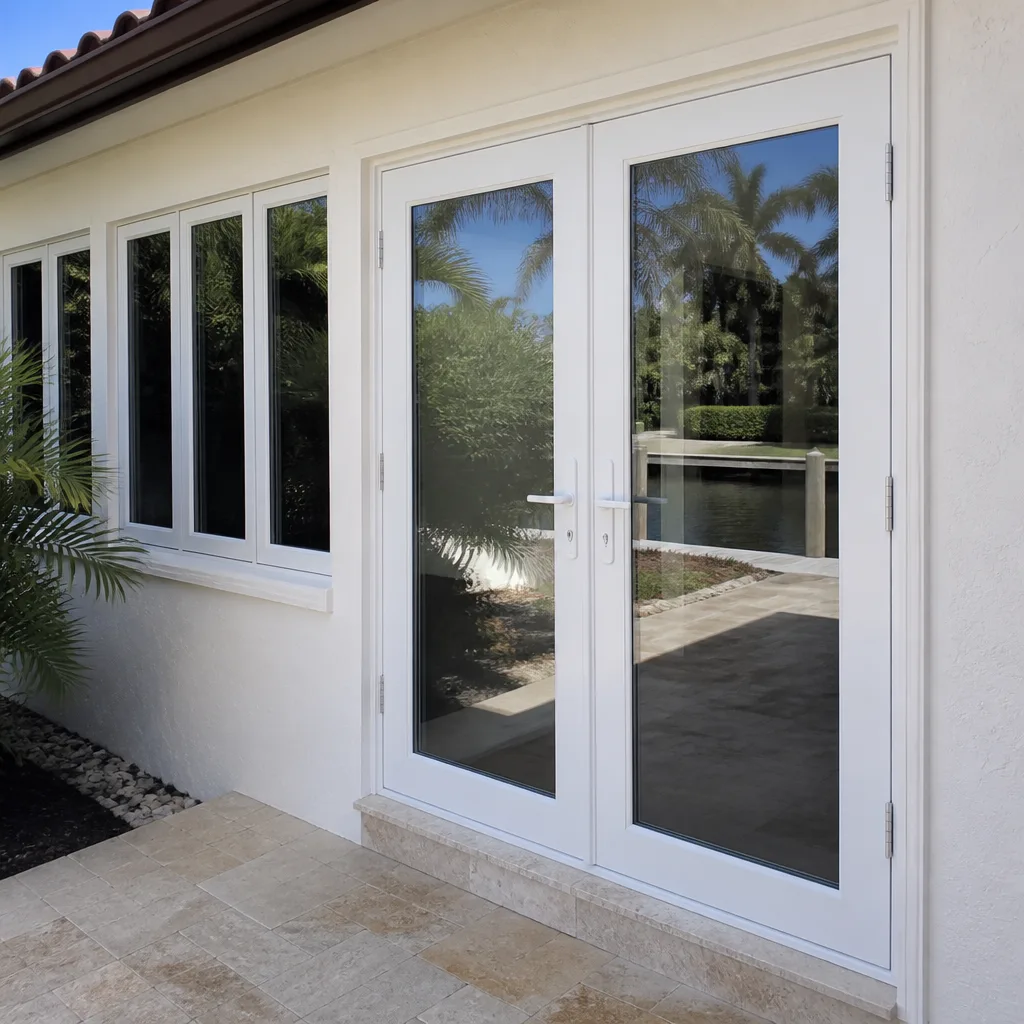 After
After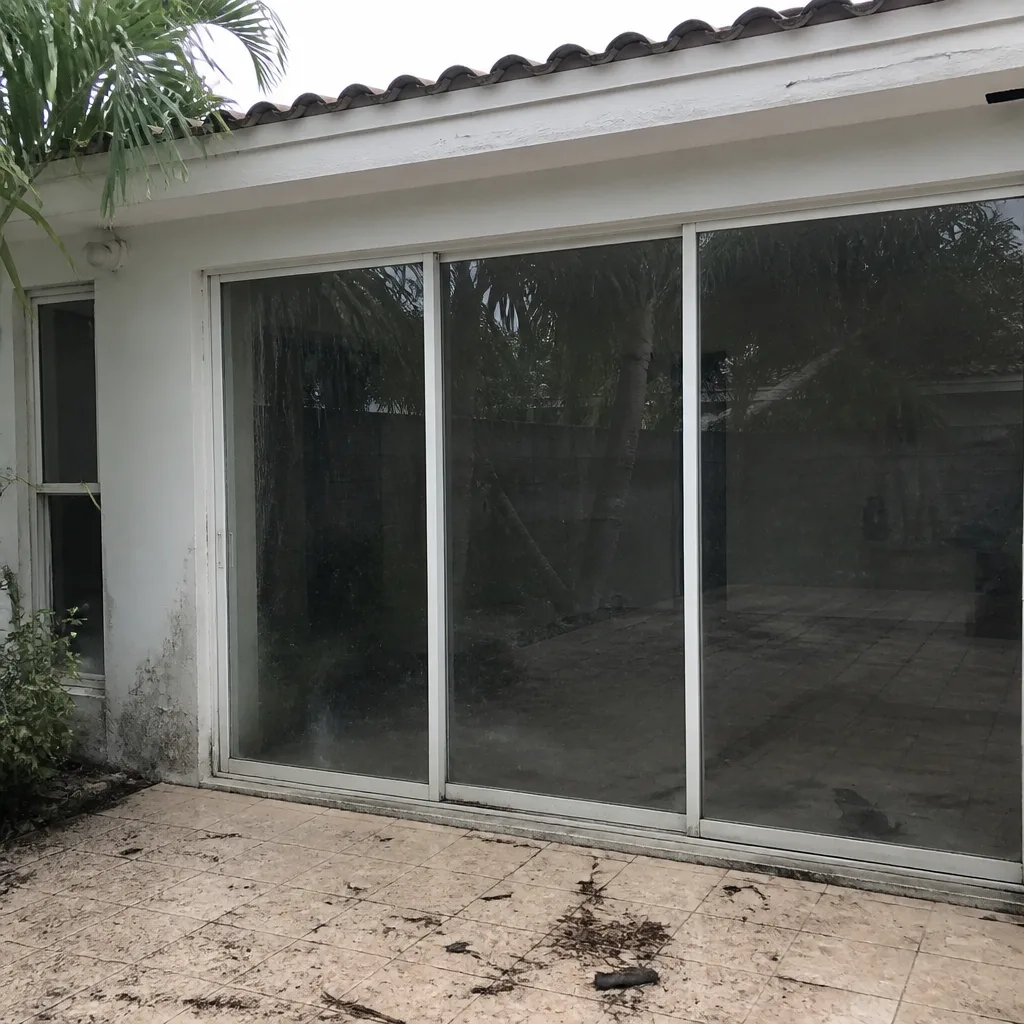 Before
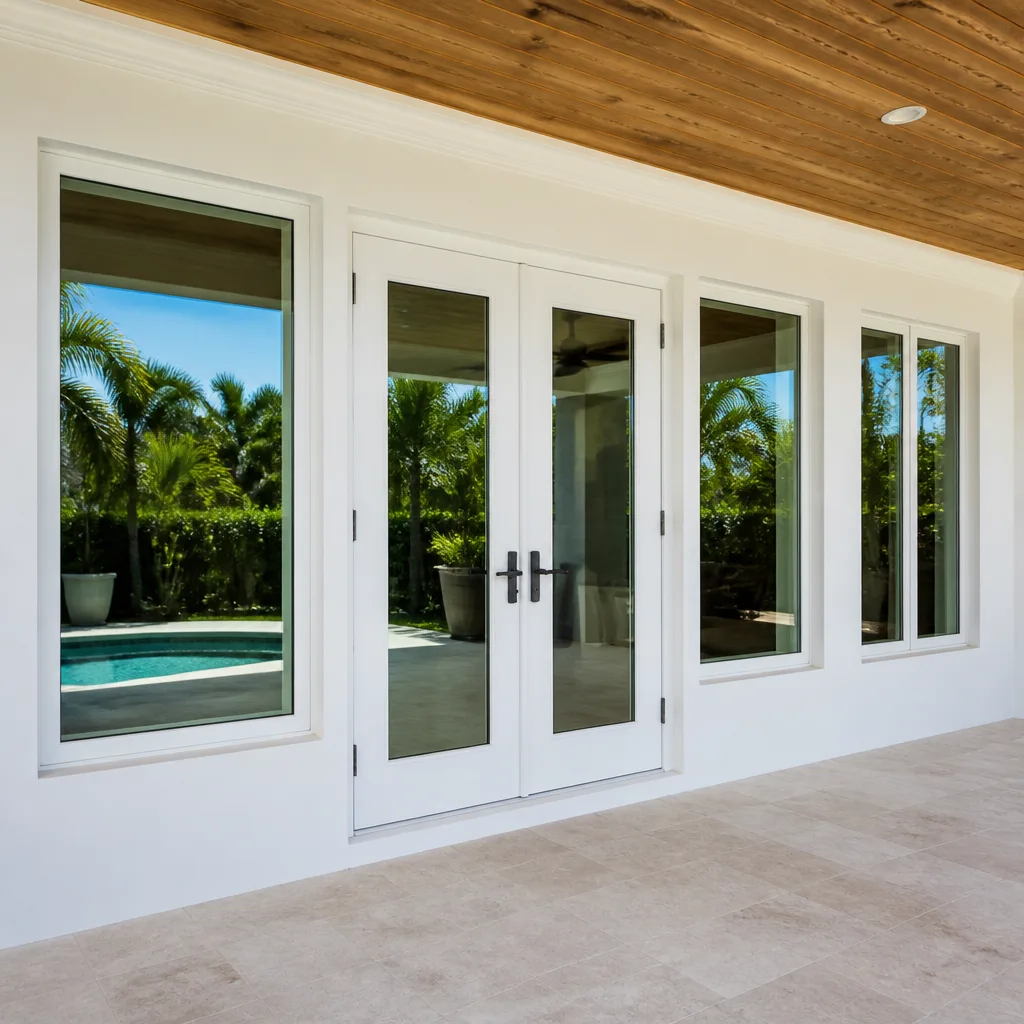 After
AfterWindows & Doors Warning Signs: A Miami Homeowner’s Reference Guide
Most window and door problems in Miami announce themselves well before they become structural or code issues. The difficulty is that the early signals are easy to rationalize away as minor inconveniences rather than read as the specific failure indicators they are. A door that sticks slightly in summer and loosens in winter is often read as a humidity quirk, and sometimes it is. But in Miami’s built environment, that same symptom is also one of the earlier indicators of frame racking or foundation movement, and the difference between the two shows up in a specific place on the frame that most homeowners never look. This guide names each signal and explains what it is actually telling you.
Quick Answer
Window and door warning signs in Miami fall into five categories: condensation location, glass condition, frame integrity, hardware behavior, and sound transmission changes. Interior condensation points to indoor humidity problems, exterior condensation is normal, but condensation between panes means the sealed unit has failed and lost its insulating gas. Binding doors, hard-turning handles, visible frame corrosion at the anchor zones, and rooms that suddenly carry more street noise than before are all indicators that warrant a professional evaluation.
Table of Contents
- What Condensation Location Actually Tells You
- Impact Glass: Weathering vs. Delamination
- Frame Corrosion: Cosmetic or Structural
- Hardware Signals on Impact-Rated Multi-Point Systems
- Sound Transmission Changes as a Diagnostic Tool
- Sticking Doors and Frame Racking in Miami
- Seal Failure and Energy Cost Signals
- Repair vs. Replacement: Reading the Timeline
What Condensation Location Actually Tells You
Condensation is the most commonly misread warning sign on windows and doors in Miami. Not all condensation is a problem, and the location of the moisture tells you exactly what is happening. The fastest way to diagnose the issue is to identify which surface the water is on.
Condensation on the interior surface (the side of the glass facing your living room) is a humidity problem inside your house, not a window failure. Miami’s climate pushes outdoor humidity levels above 80% for much of the year, and interior air conditioning creates cold glass surfaces. When warm, moisture-laden indoor air touches that cold surface, water condenses. This signals poor interior air circulation or high indoor humidity from cooking, showers, or plants, not a defect in the glass. The fix is ventilation or dehumidification, not window replacement.
Condensation on the exterior surface (the side of the glass facing your yard) is actually a sign the window is working correctly. It means the low-E coating is reflecting heat back outside and keeping the exterior pane cooler than the morning dew point. Miami homeowners see this most often on clear mornings after cool nights, especially before sunrise. It burns off as the day warms. This is not a defect.
Condensation between the panes is the one warning sign that never self-corrects. Modern double and triple pane windows in Miami are sealed units filled with argon or krypton gas. When that seal fails, the gas escapes, ordinary air with moisture enters, and condensation forms inside the glass cavity. You cannot wipe it off. This means the window has lost its insulating performance and its impact rating may be compromised depending on the construction. In Miami, where building code requires impact-rated units in most residential applications, a fogged sealed unit is a replacement conversation, not a repair. We have replaced hundreds of fogged units across Miami neighborhoods from Kendall to Aventura, and the common thread is always the same: the fog appeared gradually over one or two seasons, and by the time it was visible every day, the window had been underperforming for a year or more.
Impact Glass: Weathering vs. Delamination
Impact glass in Miami is not ordinary glass. It is a laminated assembly: two panes of glass bonded to a polymer interlayer, typically polyvinyl butyral (PVB) or an ionoplast material like SentryGlas. That interlayer is what holds the glass together when a hurricane-driven 2×4 strikes it. It is also the component that fails over time in a specific, identifiable way, and the timeline between early and late failure is shorter than most homeowners assume.
Normal weathering on impact glass looks like surface-level wear: light scratches, hard water spotting from irrigation overspray, mild haze along the edges where the sealant has aged. This is cosmetic. It does not affect the structural integrity of the laminated unit, and a good cleaning or, in some cases, a re-seal of the perimeter keeps it in service.
Delamination is different. It begins when moisture intrudes at the edge of the laminated assembly and begins separating the glass from the interlayer. In its early stages, it looks like a faint milky or cloudy band around the perimeter of the glass, usually starting at a corner or along an edge near the frame. Homeowners often mistake it for dirty glass and try to clean it. It does not clean off. As delamination progresses, the cloudy area spreads inward, and the glass may develop visible bubbles, a prismatic or rainbow-colored sheen in patches, or a whitish, frosted appearance that intensifies over time. In late stages, the panes can separate enough that the window loses impact certification entirely, and you may see visible distortion or even feel the glass flex when you press on the center.
The timeline matters. In Miami’s heat and humidity, delamination that starts as a corner haze can reach a point where the unit is no longer performing to impact standards in 18 to 36 months. That is not a long runway. If you see a cloudy edge on your impact windows that does not clean off with glass cleaner and a cloth, you are looking at the early stage of a failure that will only accelerate. One place we have seen this repeatedly is in the older impact installations along Bird Road and Coral Way corridors, where windows from the early 2000s are now hitting the end of their service life.
Frame Corrosion: Cosmetic or Structural
Aluminum frames are common in Miami because they resist the salt air better than wood and cost less than thermally broken alternatives. But aluminum does corrode in this environment, and the critical distinction is where the corrosion is located.
Cosmetic corrosion shows up on the exposed, non-load-bearing surfaces of the frame: the corners of the sash, the exterior face of the frame, the areas around the weep holes where water drains. It looks like white, powdery deposits (aluminum oxide) or pitting on the surface. This is a maintenance item. Cleaning the frame, addressing the drainage issue that caused the standing water, and applying a protective coating can extend the frame’s life. Some Miami homeowners paint over this, but painting over active corrosion without treating the aluminum first just hides the problem for a season.
Structural corrosion is what matters. The anchor zone is the part of the frame where the window or door attaches to the concrete block or wood buck of the opening. This is where the structural load transfers from the frame into the building. If corrosion has reached the anchor zone, meaning the area around the installation screws, anchor bolts, or mullion connectors is pitted, flaking, or showing visible loss of metal, the connection that holds your window in the wall during a high-wind event is compromised. This is a replacement conversation, not a maintenance item. In Miami-Dade County, where building code requires windows to withstand windborne debris and specific design pressures, a corroded anchor weakens the entire assembly in ways you cannot see from inside the house.
The test is simple. Open the sash and look at the corners of the frame where the unit is screwed into the opening. If the metal there is clean or shows only light surface oxidation, you are dealing with cosmetics. If the metal is pitted, flaking, or you can see rust stains or white powder around the fasteners, the corrosion has reached the structural zone. Call a professional. In our experience replacing windows across Miami, we have opened walls and found frames that looked acceptable from outside but were so corroded at the anchors that they came out of the opening with hand pressure alone.
Hardware Signals on Impact-Rated Multi-Point Systems
Impact-rated doors in Miami often use multi-point locking systems: a single handle throw that engages two, three, or four locking points along the door edge. These systems are engineered to keep the door panel engaged with the frame along its entire length during high wind loads. When they start misbehaving, the signal tells you whether the hardware is wearing or the frame has moved.
Binding happens when the handle turns hard, or the door needs a shoulder to close fully. It may mean the door panel is sagging on its hinges and the locking points no longer align with their receivers. On a multi-point system, though, binding can also mean the frame has racked or the panel has flexed due to temperature or settlement. The diagnostic question is whether the binding is consistent or seasonal. If a Miami door binds only in July and August, heat expansion is part of the picture. If it binds year-round or is getting worse month over month, the frame or panel geometry has changed, and that is a structural read.
Partial engagement is a more specific signal. With a multi-point lock, you should feel a distinct movement through the handle as each point engages: a steady, progressive resistance that ends with a solid stop. If you get partial engagement, meaning the handle turns but the door does not feel seated at the top or bottom, one or more locking points are not entering their receivers. This often means the door panel is out of plane with the frame, either from hinge wear or from the frame having moved out of square. In a hurricane-rated door, partial engagement means the door is not performing to its design load. That is the entire point of having the door in the first place.
Handle resistance that builds slowly over months, without any seasonal pattern, typically points to lubrication failure or internal gear wear in the lock body. This is the best-case scenario because the fix is usually a replacement hardware set, not a door replacement. If the hardware has been in service for fifteen years or more, replacing the lock body and cylinders is standard maintenance on impact doors in Miami’s salt air environment.
A caution: multi-point lock systems are under tension, and some components are spring-loaded. If the lock body fails internally, opening the door can be difficult, and forcing the handle can do more damage. This is not a DIY repair. If you are in Miami and a multi-point lock starts resisting, call before you force it.
Sound Transmission Changes as a Diagnostic Tool
A room that used to be quiet and now carries more street noise is telling you something about your windows or doors. The change does not happen by accident. Glass does not become acoustically transparent on its own. Here is what the sound is actually indicating.
When a sealed unit loses its seal, the gas escapes. The inert gas between panes is one of the barriers to sound transmission. When it is gone, the window transmits more noise. The difference is not dramatic enough that you would notice from one day to the next, but over a season it becomes unmistakable. A bedroom that used to be quiet at 6 a.m. and now wakes you with the first bus down Dixie Highway has likely lost one or more sealed units.
Frame and weatherstripping gaps transmit sound at a different frequency than glass. A high-frequency hiss or whistle comes from air moving through a small gap. A general increase in low-frequency rumble comes from glass that is underperforming. In Miami, where neighborhoods sit close to I-95, the Palmetto Expressway, and the Turnpike, sound transmission is one of the easiest ways to notice that a window has lost performance. Homeowners in neighborhoods like Shenandoah, Silver Bluff, and Morningside, which are close to major roads, often report the change first as increased road rumble at night.
The test is comparative. Stand in a room you know well, with the window closed, at a quiet time of day. Then open the window. If the difference in sound is smaller than it used to be, the window is transmitting more than it should. If you can feel air moving around the edges of the frame while the window is closed and locked, you have identified the path directly. Both signals are worth a professional look, and in our experience, by the time a homeowner notices the noise, the seal has been gone for a while.
Sticking Doors and Frame Racking in Miami
The hook for this guide was a door that sticks slightly in summer and loosens in winter. In Miami, where summer means heat, humidity, and daily rain, a sticking door is often waved off as a weather quirk. Sometimes it is. Wood doors expand in humidity. Aluminum and steel doors expand in heat. The question is whether the sticking is consistent with the weather or whether it reveals something happening in the structure.
Here is the specific place to look. On a door that is simply expanding with the season, the sticking will be consistent along the contact edge. The door will rub evenly along the strike side or along the top. On a door that is sticking because the frame has racked, the sticking will be localized: the top corner on one side and the bottom corner on the opposite side will rub, while the middle closes freely. That diagonal pattern is the signature of a frame that is no longer square.
Miami’s soil is limestone and sand, and houses sit on slabs that can settle unevenly over decades. Older homes in neighborhoods like Coconut Grove, Coral Gables, and Little Havana have had fifty, sixty, seventy years of settling. When a slab moves, the window and door openings move with it. A door that racks is one of the earliest detectable signs because doors have tight tolerances. A door that has moved out of square by an eighth of an inch will tell you with a rub that a wall may have moved by more than that.
The next step is to look at the reveals, the gaps between the door panel and the frame. An uneven reveal, wide at one corner and tight at the opposite, confirms the frame has moved out of square, either because the door slab has sagged on its hinges or because the opening itself has shifted. If the hinges are tight and the slab is not sagging, the opening has moved. That is a structural conversation. If the door is a recent installation and the reveal is already uneven, the installation itself deserves scrutiny, because a door set out of true in Miami will only get worse as the building moves under it.
For more on when a sticking door means replacement rather than adjustment, see our guide to window replacement in Miami. The short version: adjust what is adjustable, replace what is failing, and never force a door that fights back, because the frame is telling you something.
Seal Failure and Energy Cost Signals
Energy bills in Miami are high because air conditioning runs for most of the year. When windows and doors lose their seal, the house leaks conditioned air, and the AC works harder. The energy bill is a diagnostic tool, but it is a lagging indicator. By the time the bill shows a clear increase, the windows have been leaking for a season or more.
Here is what seal failure looks like in stages. In the first stage, the window develops a slight haze between the panes on cool mornings, which clears as the day warms. Homeowners usually miss this. In the second stage, the haze persists through the day and condensation appears between panes after rain or during humid spells. This is the stage where most Miami homeowners notice the problem. In the third stage, the glass fogs permanently, and the window has lost most of its insulating value.
You can feel the failure before you see it. On a hot Miami afternoon, hold your hand a few inches from the interior glass. A performing window will reflect most of the heat, and the glass will feel only slightly warm. A failed window will radiate heat like an open oven door. If you have several windows that feel this way on the western exposure of your house, that exposure is essentially uninsulated glass, and your AC is running against it all afternoon.
For doors, the equivalent signal is air movement. On a humid Miami evening, if you can feel air moving around the perimeter of a closed and locked door, the weatherstripping has failed or the frame and panel are no longer meeting square. Either way, conditioned air is leaving the house and humid air is entering, and the visible sign of that exchange is often the condensation that forms on floor tiles near the door on summer mornings.
Energy-efficient window technology has changed significantly in the last twenty years. If your windows are original to a house built in the 1990s or early 2000s, they were likely single-pane or early double-pane units with low basic performance standards. Today’s impact windows in Miami combine laminated glass with low-E coatings and insulated frames. The performance difference is measurable, and for a homeowner planning to stay in the house for decades, it is a difference that shows up every single month on the FPL bill.
Repair vs. Replacement: Reading the Timeline
Every warning sign in this guide has an urgency level, and the urgency determines whether you are in a repair conversation or a replacement conversation.
- Exterior condensation: No action needed. This is the window working correctly.
- Interior condensation: Address indoor humidity first. The windows are likely fine.
- Between-pane condensation: Replacement conversation. A failed sealed unit cannot be repaired.
- Edge haze on impact glass: Replacement conversation that is time-sensitive. Delamination accelerates in Miami’s climate.
- Cosmetic frame corrosion: Maintenance item. Treat and protect.
- Corrosion at the anchor zone: Replacement conversation. The structural connection is compromised.
- Seasonal door sticking with even contact: Adjustment item. The door is responding to weather.
- Diagonal door sticking with uneven reveals: Structural evaluation. Either the door, the frame, or the opening has moved.
- Partial engagement on a multi-point lock: Hardware or frame issue that requires professional diagnosis. Do not force.
- Permanent between-pane fog: Replacement conversation. The unit has been underperforming for a year or more.
The timeline in Miami is shorter than in drier climates because humidity and salt air accelerate every failure mode described here. A sealed unit that might limp along for five years in Phoenix will fail visibly in two or three in Miami. That is not a marketing claim. It is what the climate does to materials. For a full discussion of when replacement is the right call and what it costs, see our guide to window installation in Miami. If you are considering a specific project, replacements in Miami follow a different decision path than new-construction installs, and the warranty implications differ too.
Common Mistakes to Avoid
- Wiping fogged glass with cleaner and assuming it is dirt. Between-pane fog does not clean off because it is inside the sealed cavity. The haze is the signal, not the problem.
- Forcing a binding multi-point lock. This is the fastest way to turn a $200 hardware repair into a $2,000 door replacement. Multi-point systems are part of the impact rating, and the lock body is under tension.
- Painting over frame corrosion without treating the aluminum. Paint seals moisture against the frame and accelerates the corrosion underneath. In Miami’s climate, a painted-over corrosion patch can reach the anchor zone within two seasons.
- Ignoring a door that sticks only in summer. Summer sticking is often the first warning sign of a frame that is moving. If the reveals are uneven, the heat is exposing a problem that the cooler months hide.
- Assuming a fogged window is still impact-rated because the glass is intact. A failed sealed unit may still hold together, but its performance is compromised. A window that has lost its gas and sealant integrity is not performing to the design pressures it was rated for.
- Waiting until a window is visibly fogged every day to call for a quote. By the time fog is permanent, the window has been leaking energy for a full summer or more. The bill you paid for the AC during that time is a real cost measured against the price of replacement.
- Replacing one failed unit in a bank of windows without checking the others. Windows installed at the same time tend to fail at roughly the same time. Replacing one in isolation usually means coming back for the others within two seasons.
When to Call a Professional
Call when you see between-pane fog that does not clear, edge haze on impact glass that does not wipe off, corrosion at the frame anchors, diagonal door sticking, or partial engagement on a multi-point lock. These are not maintenance items. In our experience across Miami, the homeowners who call at the first signal spend less than the ones who wait. TruePane Windows & Doors offers free estimates across Miami, from Homestead to Hallandale Beach, and every evaluation is specific: we measure every opening twice, quote manufacturer lines side by side on paper, and tell you exactly what the window or door is doing and whether it needs adjustment, repair, or replacement. We have been doing this in Miami since 2008, and impact windows are the core of our work here. Call (561) 489-4036 to schedule your free estimate. The estimate costs nothing, and it will tell you exactly where you stand.
Frequently Asked Questions
Window replacement in Miami typically runs between $800 and $2,400 per opening for impact-rated units, depending on size, frame material, and manufacturer. Standard aluminum impact windows on the lower end of that range, while thermally broken or premium lines like PGT and Mr-Glass product families run higher. Every TruePane quote includes both warranty layers registered in writing, and the price you are quoted is the price you pay, with no surprise line items on the bill. Call (561) 489-4036 for a free estimate on your specific openings.
A fogged window, meaning condensation between the panes of a sealed unit, cannot be repaired. The seal has failed, the insulating gas has escaped, and the only fix is replacement of the sealed unit or the entire window, depending on the frame condition. Some glass shops offer “fog removal” services that drill and vent the unit, but this does not restore the insulating gas or the impact rating, and in a Miami climate the fog returns quickly. We recommend replacement with a properly rated unit.
Impact windows in Miami last between 20 and 30 years on average, depending on exposure to salt air, sun, and wind-driven rain. Windows on the ocean side of a house in neighborhoods like Brickell or Key Biscayne often show seal failure or delamination earlier than windows on inland exposures. Regular inspection and cleaning extend the service life, and the hardware on impact doors often needs replacement before the glass does.
Yes. Window and door replacement in Miami-Dade County requires permits and inspections, and the products must meet the county’s High Velocity Hurricane Zone standards. This is not optional, and a company that tells you otherwise is not doing you a favor. TruePane pulls permits on every job that requires one, and we stay on site through the inspection. The permit process is part of the job, not an add-on, and it is built into the quote from the start.
Not with TruePane. Our quotes are fixed, and the price on paper is the price on the final bill. The exception is if we open a wall and find damage that no one could have seen from the outside, and in that case we stop, explain exactly what we found, and give you a written change order before doing anything else. You will never get a surprise bill for work you did not approve in writing.
A typical window replacement of five to ten openings takes one to two days with TruePane, including removal, installation, and cleanup. Larger projects, multi-story work, or jobs involving custom sizes may run longer, and the timeline is laid out in the written estimate before the job starts. We measure every opening twice, order to the exact dimensions, and schedule the work so it is done in one visit where possible. Call (561) 489-4036 to get a time estimate for your specific project.
The Bottom Line
Windows and doors in Miami do not fail silently. They announce themselves through condensation location, edge haze, frame corrosion, hardware behavior, and sound changes, and each signal points to a specific cause with a specific urgency level. Learning to read the signals means the difference between a maintenance item and a structural conversation, between a $200 hardware repair and a $2,000 door replacement, between catching delamination early and discovering it after the window has already lost its impact rating. The common thread through every signal in this guide is simple: the earlier you read it, the less it costs. If you are seeing any of these warning signs, call (561) 489-4036 for a free estimate. We will tell you exactly what the window is doing, what it needs, and what it costs, in writing.
Written by Dale Kessler, Owner at TruePane Windows & Doors, serving Miami since 2008.
Six Reasons Homeowners Choose TruePane Windows & Doors
Impact systems engineered to design pressures up to +/-100, matched to your wind zone - your openings hold when the storm arrives.
Low-E insulated impact glass from our manufacturer lines commonly cuts monthly cooling bills 20-30%.
Laminated impact glass shuts out up to 40% of outside noise - traffic, neighbors, weather.
Monitoring services run $30-90 a month. Laminated impact glass resists forced entry around the clock, with no subscription.
Florida homeowners average around 25% savings on the windstorm portion of their policy after protecting every opening - some homes qualify for more.
A full impact package upgrades curb appeal, buyer confidence and appraised value in one project.